Brass/Red brass
B1 / B2A / B3
RB1
C26000 / C26800 / C28000 / C21000
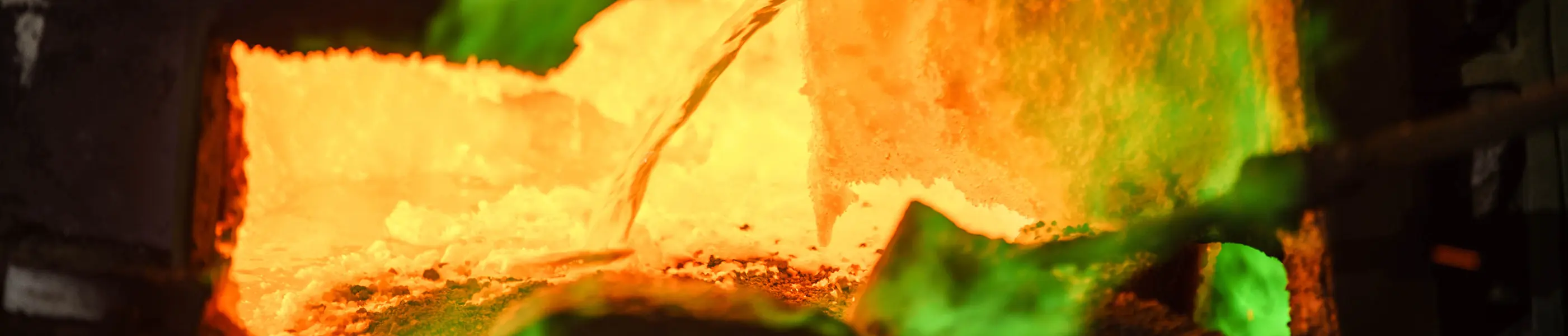
Brass/Red brass
C26000 / C26800 / C28000 / C21000
Radiator, snap button, camera parts, thermos bottle, wiring bracket, switch terminal, metal goods, clock dial for construction, jewelry, cosmetic cases, furniture drawing, zipper, cartridge case





Brass is an alloy of copper and zinc. It has relatively high conductivity compared with other
alloys, and has strength compared with pure copper, and the price thereof is relatively inexpensive.
For this reason, Brass has been widely used in various industries.
Note : The following data are only for information, not specifications.
Brass and red brass alloys are produced by melting and casting electrolytic copper and zinc and are supplied in plate and strip forms.
The gunmetal is also called red brass, and shows pale pink color. It is an alloy of copper and zinc, but the color changes according to the content of zinc. In terms of its beautiful color tone, it is used not only for building but also for cases of accessories and cosmetics, and the like. Examples of the gunmetal include an alloy having the content of copper in a range of 78.5% to 96.0%, and consisting of remaining zinc (C2100 to C2400).
The brass (gold) is an alloy of copper and zinc, and especially an alloy with the zinc of 20% or more. It is excellent in workability such as extensibility, flexibility, drawability, and plating property, and it has been widely used as an industrial material.
The chemical components of Red brass (C2100) are as follows.
(Weight%)
| Cu | Zn |
|---|---|
| 95 | 5 |
The chemical components of Brass (C2600) are as follows.
(Weight %)
| Cu | Zn |
|---|---|
| 70 | 30 |
The physical properties of Red Brass (C2100) are shown below. NOTE: The physical properties are average.
| Property | Representative Value |
|---|---|
| Specific Gravity (293K) | 8.86 |
| Coefficient of Thermal Expansion (×10-6/K:293~573K) |
18.1 |
| Thermal Conductivity (W/(m・K):293K) |
234 |
| Volume Resistivity (μΩm:293K) |
0.0308 |
| Electrical Conductivity (%IACS:293K) |
56 |
| Modulus of Elasticity (kN/mm²:293K) |
118 |
The physical properties of brass (C2600) are as follows. NOTE: The physical properties are average.
| Property | Representative Value |
|---|---|
| Specific Gravity (293K) | 8.53 |
| Coefficient of Thermal Expansion (×10-6/K:293~573K) |
19.9 |
| Thermal Conductivity (W/(m・K):293K) |
121 |
| Volume Resistivity (μΩm:293K) |
0.0616 |
| Electrical Conductivity (%IACS:293K) |
28 |
| Modulus of Elasticity (kN/mm²:293K) |
110 |
The mechanical properties of Brass (C2600) and Red brass (C2100) are as follows.
| Temper | ||||
|---|---|---|---|---|
| 0 | 1/4H | 1/2H | H | |
| Tensile Strength (N/mm²) |
205Min. | 225~305 | 265~345 | 305Min. |
| Elongation (%) |
33 | 23 | 18 | |
| Vickers Hardness (HV) |
(60Max.) | (60~90) | (80~110) | (100Min.) |
| Temper | ||||||||
|---|---|---|---|---|---|---|---|---|
| 0 | 1/4H | 1/2H | 3/4H | H | EH | SH | ESH | |
| Tensile Strength (N/mm²) |
275Min. | 325~410 | 355~440 | 375~470 | 410~540 | 520~620 | 570~655 | 620Min. |
| Elongation (%) |
40 | 35 | 28 | 20 | ||||
| Vickers Hardness (HV) |
(60~80) | (80~105) | (100~130) | (120~145) | (135~160) | (155~175) | (170~190) | (180Min.) |