High conductivity copper alloy
C151
C15100
- High current
High conductivity copper alloy
C15100
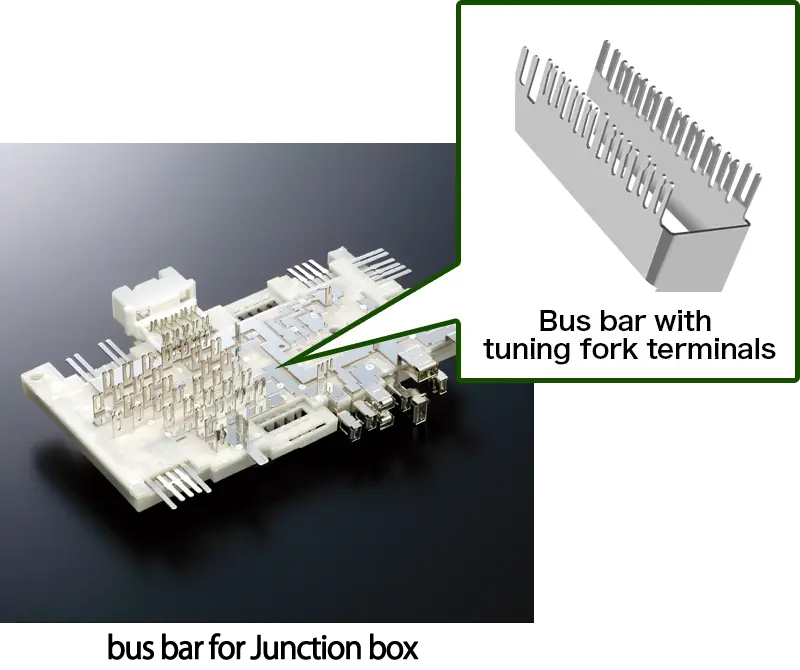
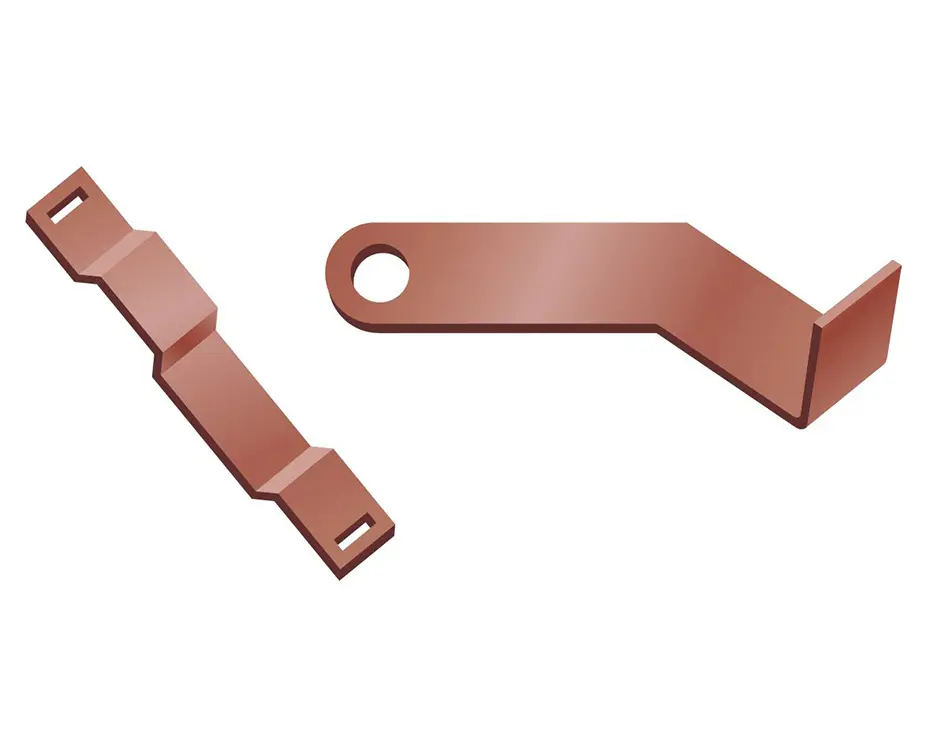
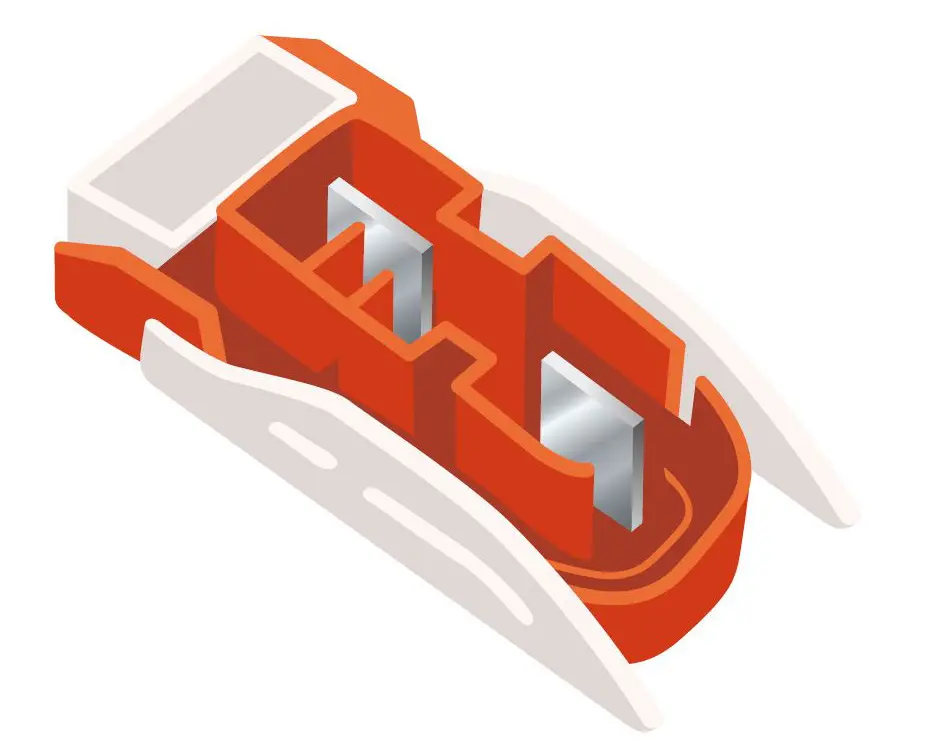
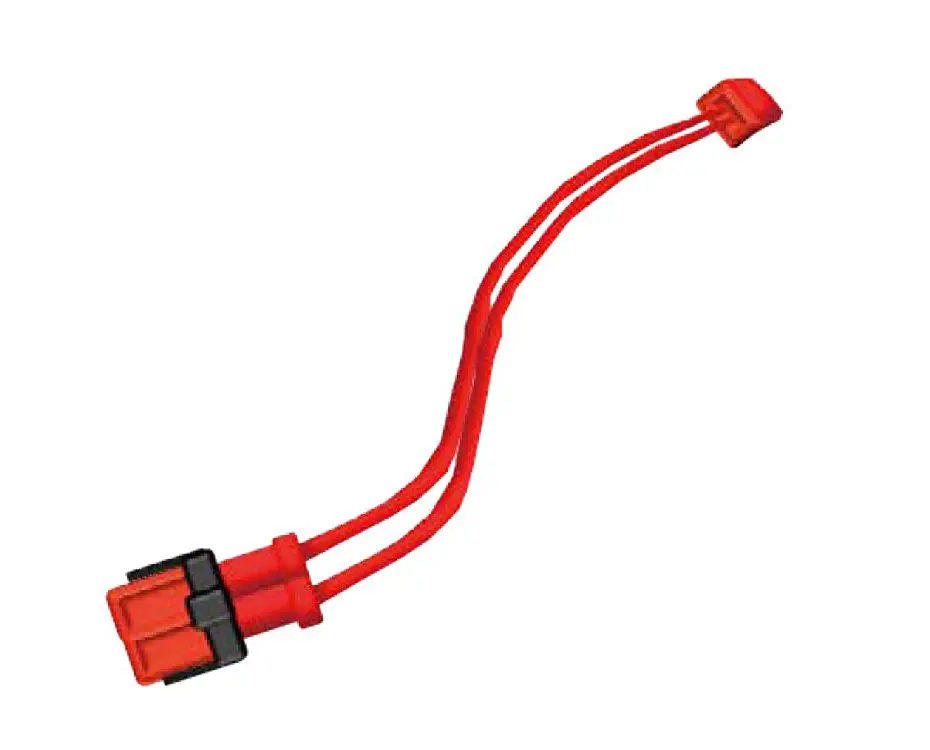
C151:Non‑magnetic IC lead frame, lead frame for transistor, various semiconductor package heat sink, and the like Automotive terminals · connectors, junction boxes, bus bars, conductive parts requiring high current





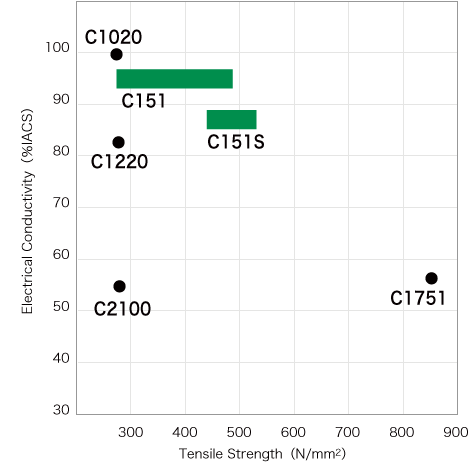
C151 is suitable for high power lead frames due to the excellent balance of electrical conductivity, strength and heat resistance.
C151 is a copper alloy obtained by adding 0.1% of zirconium to pure copper. It succeeded in improving strength and heat resistance while maintaining high conductivity with a simple component.
(Weight %)
| Zr | Cu |
|---|---|
| 0.1 | Rem. |
| Property | Representative Value |
|---|---|
| Specific Gravity(293K) | 8.9 |
| Coefficient of Thermal Expansion (×10-6/K:293~573K) |
17.7 |
| Thermal Conductivity (W/(m・K):293K) |
360 |
| Volume Resistivity (μΩm:293K) |
0.018 |
| Electrical Conductivity(%IACS:293K) | 95 |
| Modulus of Elasticity(kN/mm²:293K) | 121 |
C151S has an excellence balance of strength, an excellence conductivity and heat resistance. An excellence we can provide those properties by our original technology.
C151S has higher strength than C151
The chemical components of C151S are as follows.
Excellent conductivity is exhibited with a
simple component.
(Weight %)
| Zr | Cu |
|---|---|
| 0.1 | Rem. |
The physical properties of C151S are as follows.
| Property | Representative Value |
|---|---|
| Specific Gravity (293K) | 8.9 |
| Coefficient of Thermal Expansion (×10-6/K:293~573K) |
17.7 |
| Thermal Conductivity (W/(m・K):293K) |
347 |
| Volume Resistivity (μΩm:293K) |
0.020 |
| Electrical Conductivity(%IACS:293K) | 88 |
| Modulus of Elasticity(kN/mm²:293K) | 121 |
C151S has the high stress relaxation characteristics that contribute to the compactness and weight reduction of electrical components (junction boxes, and the like) for recent hybrid vehicles, EV cars, and the like which require the high current.
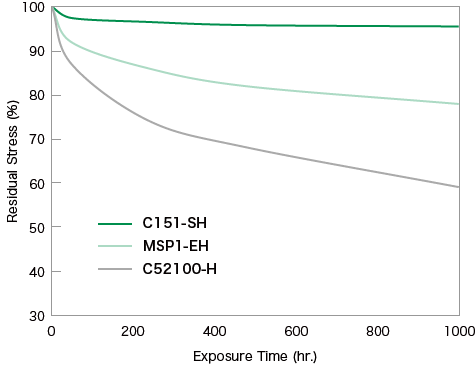
Exposure temperature: 150℃
Sampling direction: Parallel to the rolling
direction
Bending stress: 80% of 0.2% yield strength